Business jet charter card provider Magellan Jets has launched a new Corporate Membership program. The new card for companies committing to a minimum of 100 flight hours promises greater flexibility and value with features such as guaranteed aircraft availability with six hours notice—compared with eight hours for individual members—and no peak-day restrictions, surcharges or black-out dates.
Other benefits of Corporate Membership include aircraft no older than 2004 delivery, compared with the usual 2000 for individual members; members can push back departure times by up to two hours; $100 million minimum liability insurance for all aircraft categories, versus $50 million for light jets; catering included; WiFi guaranteed for midsize aircraft and larger; 15-percent credit for roundtrip flights; and 5-percent credit on legs of more than four hours.
Flight hour rates are between 10 and 18 percent higher than for individual memberships, but the program includes additional long-range jets such as the Gulfstream G550 and G650, as well as the Bombardier Global 5000 and 6000.
courtesy AIN Online, Charles Alcock
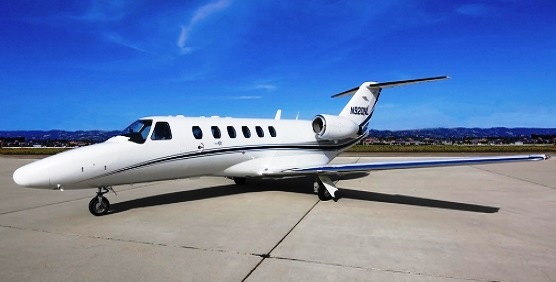
Citation CJ2 jet now based Santa Barbara CA and operated by CI Jets
CI Jets, a division of Camarillo-based Channel Islands Aviation, has expanded its charter jet business into the Santa Barbara market, reports Sarah Oberman Bartush, chief marketing officer with Channel Islands Aviation.
CI Jets, which is ARGUS Gold-rated and Wyvern-Registered, will begin operating from the Santa Barbara Airport (SBA), and operate 24 hours a day, 365 days a year.
The CI Jets passenger fleet includes two Cessna Citations; a CJ2 and CJ3. The CJ2 is based in Santa Barbara.
All 12 charter jets now based at Santa Barbara are listed only in FlightList PRO
Along with the jet charter business, CI Jets also offers aircraft maintenance services, mentor pilots for owner-flown aircraft and jet brokerage services.
Family-owned Channel Islands Aviation was established in 1976 to fly private charter aircraft to the Channel Islands. Today, the company still flies to the Channel Islands and also provides fixed-base operator services, aircraft sales, aircraft maintenance and a flight school.
Seen by many as the ultimate accolade for companies in the air charter industry, the winners of the BACA Excellence Awards are chosen by the membership of BACA, via a vote from a shortlist of finalists, also decided by the members.
On the 14th October over 380 executives from the air charter industry gathered at London’s Guildhall for the Baltic Air Charter Association’s (BACA) annual awards ceremony.
On the 14th October the winners were as follows:
Best Passenger Charter Airline
(sponsored by The Charter Company)
Winner: Titan AirwaysBest Cargo Charter Airline
(sponsored by Chapman Freeborn)
Winner: Volga-Dnepr AirlinesBest General Aviation Operator
(sponsored by Direct Air Charters)
Winner: London Executive AviationBest Handling Agent / FBO
(sponsored by LEA)
Winner: TAG Farnborough AirportBACA Global Excellence Award
(sponsored by ACS)
Winner: Air HamburgBACA Humanitarian Award
(sponsored by DHL)
Winner: AirLec Air Espace
Tony Coe, BACA Chairman paid tribute to the dedication of BACA members in what has been a busy six months since the last association lunch. Tony congratulated the winners and noted that the 2015 BACA Excellence Awards were “an occasion to honour those companies that have performed outstandingly over the last 12 months and upheld the high values and standards that are the essence of BACA.”
Business jet charter broker and card provider Magellan Jets launched its new Corporate Membership program. The new card for companies committing to a minimum of 100 flight hours promises greater flexibility and value with features such as guaranteed aircraft availability with six hours notice—compared with eight hours for individual members—and no peak-day restrictions, surcharges or black-out dates.
Other benefits of Corporate Membership include aircraft no older than 2004 delivery, compared with the usual 2000 for individual members; members can push back departure times by up to two hours; $100 million minimum liability insurance for all aircraft categories, versus $50 million for light jets; catering included; WiFi guaranteed for midsize aircraft and larger; 15-percent credit for round-trip flights; and 5-percent credit on legs of more than four hours.
Flight hour rates are between 10 and 18 percent higher than for individual memberships, but the program includes additional long-range jets such as the Gulfstream G550 and G650, as well as the Bombardier Global 5000 and 6000.
courtesy AIN Online
Air Cargo News, 10/19/2015
Traditional cargo charter brokers are developing their services as they face competition from new market entrants and customers increasingly gain direct access to airlines.
Speaking at the Freighters and Belly Cargo Conference in Abu Dhabi, Air Charter Service (ACS) group commercial director Justin Lancaster highlighted some the challenges faced by traditional brokers.
He said that the internet had increasingly allowed clients to contact direct airlines directly. Also, the barriers to setting up as a broker are very low, meaning there were many new entrants to the market.
Cargo/freight operators and aircraft certified for cargo are available in FlightList PRO.
He added that freight forwarders were increasingly dealing with charters in-house, a trend led by Panalpina, and passenger networks were being expanded.
Lancaster said: “Airlines are operating more passenger aircraft and looking at routes that were traditionally cargo routes.
“This is a big threat for us and has been ongoing for some time. The airlines have to do something with the passenger aircraft that are coming onto the market and more and more they are looking at routes that were cargo charter routes.
“Airlines are taking the cargo side of the business more seriously than they were.”
Connected to this development was the increased cargo capacity of the new passenger aircraft entering the market and also market over-capacity.
“When I started,” he said, “50% of our revenues came in the last quarter driven by the peak season out of the Far East; maybe it was there last year, but for many years before that business had dried up.
“Once the capacity is gone and demand outstrips supply, that’s when cargo charter brokers can come into the equation and put aircraft that aren’t so commonly known into the Far East.”
Other challenges included: a decline in new cargo charter start-up airlines which relied on charter brokers to market the aircraft for them. Some charter industries such as oil and gas were suffering a slowdown, Lancaster said.
To counter these threats and evolve the role of the broker, ACS is investing in people, developing the skills of its people through training, continuing to develop a global reach with regional offices that know the local market and clients. It also provides local currency transactions, offers rapid response, ensures it is trustworthy, has developed its own compliance department and offers insurance.
“People are the key for us. As a broker we don’t have assets. We have people, data and knowledge,” he said.
Original article here
Private Jets For The Uber Economy
Q&A with Shari Jones, Chief Marketing Officer, XOJET
The Economist Group - Lean BackBy Mercedes Cardona
October 19, 2015What do you see as the biggest challenge facing marketing: fragmented media, empowered consumers, evolving technology, or all at once?
It’s finding the right client and connecting with them with the right message, at the same time. That hasn’t changed so much. What has changed is the pace of disruption and the tools we have at our disposal; also how our potential consumers are bombarded by so many messages and so many options.
The onus on CMOs today is: How are you creating a message that is compelling and beautiful and aspirational and engaging, so that client will choose to see it? Also, using all the tools at your disposal to craft an experience. I’m lucky I have the canvas of the jet to play with and the whole experience—from my advisors to my client services—in addition to the communications we’re crafting to bring that messaging to life to them.
What are some challenges specific to your brand: the world economy, generational change, consumer attitudes toward luxury?
Disruptions to our industry came a little later than disruptions in other industries, but we’re seeing the same kind of meta trend. It’s a shift from ownership. Traditionally clients would either buy a jet or buy a fraction of a jet. That’s moved to more on-demand models, similar to the model we employ, where clients only use a jet when they want to use it and they only want to pay for what they use.
The business model change has been probably the biggest one in the last three years. Accompanying that is how technology has grafted onto that, not to replace what is necessarily a high-touch experience—because by definition luxury is high-touch—but make it even better.
You’re participating in the sharing economy, but how are you approaching marketing differently than either other corporate jet companies or transport like Uber and Zipcar on the low end?
What is fresh about what we’re doing—and you can see with our latest campaign—is we’re trying to bring a more modern approach to talking to high-end clients about what is a luxury product. A more fresh, approachable way, seeing it through the point of view of the client who would use our product every day.
A lot of times luxury brands market almost two steps removed. We’re trying to bring it closer and make it that much more intimate.
On the flip side, on the lower end of the market you’re seeing a lot of new entrants that are trying to do what Uber is doing in the private jet industry. That’s fantastic for a certain segment of the market; but when you’re talking about sophisticated clients who fly a lot—just like with hotels and with other luxury products—they are going to want to have a human connection.
Speaking of technology, you launched a mobile site this year. Where does mobile fit into your marketing plan?
If you’re a travel brand, you want to be available to clients when they’re on the move, by definition. Where mobile helps us is by creating a more seamless interaction starting the conversation; but invariably, it always goes to a human on the other side of the conversation. Whether it’s requesting a flight or having a client profile that’s at the ready for our advisors or our client services team, we’re seeing it as an enabler, versus a replacement for that interaction.
Your mid-year report noted that you doubled your Facebook following. Where does social fit in with an upscale brand?
Social is interesting for high-net-worth (clients). Their social circles tend to be tighter, they’re more business partnerships, relationships, friends, family. As we think about the social platform it’s about engaging the community that surrounds that from an influencer or support function, or crews. There’s a whole community about aviation and loving aviation that we also speak to and nurture.
What’s next for XOJet? How is your new brand campaign different than the “Take Command” effort you launched in summer?
This is the next chapter in “Take Command.” With this new campaign we’ve created video ads that are really fresh, looking from the passenger’s point of view.
https://youtu.be/LObqzoexkY0
We worked with Walrus in New York to develop four video vignettes. In addition to digital, billboards are effective for us, particularly around airports, as well as print. But aside from that, we’re doing a lot more internally to create content that we’re distributing to our clients when they’re flying, our advisors are using it, as well as engaging editors and journalists around destinations.
A lot of what we’re doing on the back end is connecting our CRM system. I think Marketing Automation is a misnomer; I don’t think you could ever automate in high-net-worth, but find ways of creating a more intimate, one-to-one conversation with clients about topics that they’re interested in at the right time. That could either be about a kind of aircraft they’re interested in, or tips about a destination they are going to. We’re working on creating a portfolio of content that we can put out through our owned channels.
We’re working with travel writers to create content on destinations, curating lists of top restaurants and things to do in cities where our clients go, and engaging in communities and partnerships around client passion points—be it hobbies, golf, skiing or high performance sports. For us, in connecting with high-net-worth clients, it’s both what we’re saying from a communications standpoint, but also how we’re really connecting in their daily lives and being relevant.
Original article here
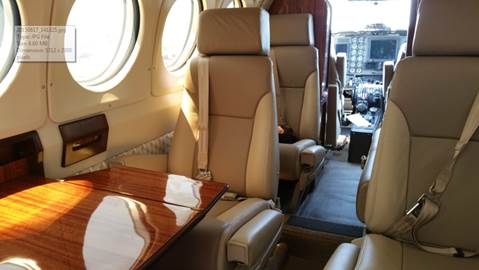
Charter Operator Premier Air Charter based at KMYF Montgomery Field in San Diego, CA has added a King Air 200 to their charter fleet. N825KA sports a 2015 refurbished interior and fresh red, white and blue paint scheme.
The only charter King Air based in central San Diego, Montgomery Field is just 15 minutes from downtown San Diego, or San Diego International Airport.
Premier Air Charter now offers a fleet of 5 charter aircraft in San Diego. In addition to the King Air 200 they operate a Cessna Conquest II, two Eclipse 500's and a Learjet 35A designated for med-flights/ambulance.
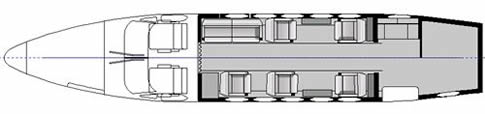
The Premier Air Charter full fleet is listed ONLY in FlightList PRO.San Diego-based King Air 200 operated by Premier Air Charter.Premier Air Charter King Air 200 Interior - Refurbished 2015San Diego King Air 200 interior seating floorplan layout
JFI Jets, a leader in private jet charter, aircraft management and maintenance, announced it has acquired ACP Jets, a respected private jet operator, according to a press release from both companies.
ACP Jets is a full-service private aviation company offering aircraft charter, management, maintenance, as well as aircraft acquisitions and consulting. ACP Jets holds an ARG/US Platinum safety rating and IS-BAO phase two certification. With offices in West Palm Beach, FL, the firm operates two Hawkers 800XP’s, a Citation X, four Gulfstream IV/SP/450’s and a part 145 maintenance repair station.
Complete fleet and operator details for both JFI Jets and ACP Jets are available in FlightList PRO.
The combined entity will immediately offer aircraft management, hangar space, charter and maintenance services in the nation’s three busiest private jet markets: New York Metro, Southern California and South Florida. Upon full FAA integration, it will operate and manage a combined fleet of 17 midsize and heavy jets available for charter.
"By merging these two industry-leading companies, we will be the only provider with facilities, aircraft, maintenance and sales offices in the top three U.S. markets for private aviation," says JFI Jets CEO Robert Seidel. "I am proud our company will be led by two of the most respected and capable executives in the industry: JFI President David Rimmer and ACP co-founder and President Suran Wijayawardana, who will join us as chief operating officer. They will lead an extremely dedicated team of private aviation professionals."
"This is a merger of two highly reputable firms with strong vision alignment and synergistic cultures that will offer our clients the highest standards of aviation services," says Suran Wijayawardana. "It is a great honor to join Robert Seidel, David Rimmer, Sohail Ashraf and Damon Danneker on this incredible team, having worked closely with them on the NATA Air Charter Committee and other Industry boards for a number of years."
Nearly 52 percent of current business jet users plan to fly the same amount over the next 12 months, while nearly 40 percent say they will fly a bit more (32 percent) or a lot more (7.9 percent), according to the just-released results of the Fifth Annual Readers' Choice Survey from Business Jet Traveler. About half said they flew the same amount over the past year as during the year before, while 21.7 percent flew a bit more and 15 percent a bit less. Only 7.7 flew much less and 5.9 percent much more.
Not surprisingly, survey respondents said “saving time” was the number-one reason that they fly on business aircraft, followed by the ability to fly into airports not served by airlines and the ability to work and hold meetings in flight. Nearly 62 percent of their flights are mostly or almost always for business, while 28.1 percent were an even mix of personal and business flying. Less than 10 percent of flights were categorized as mostly or almost always personal.
According to the survey, the most attractive feature of an aircraft is economical operation, with range, cabin size, aircraft manufacturer and age of aircraft rounding out the top five; baggage space was at the bottom of the list. Respondents’ business aircraft wish list included the Pilatus PC-12 at the lower end and the Gulfstream G650 at the top end.
Source: Aviation International News
Air Charter Industry Intelligence and Marketing Solutions:
Leading air charter brokers and travel professionals use FlightList PRO’s full-market resources, economical rates and marketing opportunities to grow their service level, their business and their bottom line.
Air Charter Broker Directory:
Free Charter Broker Directory used by private jet fliers. The largest listing of charter brokers for the U.S., Europe and worldwide. A free resource with charter broker details, ratings, accreditations, specialties and more. Go to the Air Charter Broker Directory.
Professional Aircraft Sourcing Platform:
Just $99/month-to-month. Request a free trial.
All 16,402 aircraft and 3,622 operators worldwide.
All 511 floating fleet aircraft from 48 operators.
FlightList PRO VERIFIED Economical, Professional and Independent Business Accreditation for Air Charter Brokerages. In the crowded airspace of air charter brokers, stand out to potential clients and industry partners as FlightList PRO VERIFIED, accredited as a reputable and experienced air charter service company. See more information here.
 Business jet charter card provider Magellan Jets has launched a new Corporate Membership program. The new card for companies committing to a minimum of 100 flight hours promises greater flexibility and value with features such as guaranteed aircraft availability with six hours notice—compared with eight hours for individual members—and no peak-day restrictions, surcharges or black-out dates.
Other benefits of Corporate Membership include aircraft no older than 2004 delivery, compared with the usual 2000 for individual members; members can push back departure times by up to two hours; $100 million minimum liability insurance for all aircraft categories, versus $50 million for light jets; catering included; WiFi guaranteed for midsize aircraft and larger; 15-percent credit for roundtrip flights; and 5-percent credit on legs of more than four hours.
Flight hour rates are between 10 and 18 percent higher than for individual memberships, but the program includes additional long-range jets such as the Gulfstream G550 and G650, as well as the Bombardier Global 5000 and 6000.
courtesy AIN Online, Charles Alcock
Business jet charter card provider Magellan Jets has launched a new Corporate Membership program. The new card for companies committing to a minimum of 100 flight hours promises greater flexibility and value with features such as guaranteed aircraft availability with six hours notice—compared with eight hours for individual members—and no peak-day restrictions, surcharges or black-out dates.
Other benefits of Corporate Membership include aircraft no older than 2004 delivery, compared with the usual 2000 for individual members; members can push back departure times by up to two hours; $100 million minimum liability insurance for all aircraft categories, versus $50 million for light jets; catering included; WiFi guaranteed for midsize aircraft and larger; 15-percent credit for roundtrip flights; and 5-percent credit on legs of more than four hours.
Flight hour rates are between 10 and 18 percent higher than for individual memberships, but the program includes additional long-range jets such as the Gulfstream G550 and G650, as well as the Bombardier Global 5000 and 6000.
courtesy AIN Online, Charles Alcock
 CI Jets, which is ARGUS Gold-rated and Wyvern-Registered, will begin operating from the Santa Barbara Airport (SBA), and operate 24 hours a day, 365 days a year.
The CI Jets passenger fleet includes two Cessna Citations; a CJ2 and CJ3. The CJ2 is based in Santa Barbara.
Along with the jet charter business, CI Jets also offers aircraft maintenance services, mentor pilots for owner-flown aircraft and jet brokerage services.
Family-owned Channel Islands Aviation was established in 1976 to fly private charter aircraft to the Channel Islands. Today, the company still flies to the Channel Islands and also provides fixed-base operator services, aircraft sales, aircraft maintenance and a flight school.
CI Jets, which is ARGUS Gold-rated and Wyvern-Registered, will begin operating from the Santa Barbara Airport (SBA), and operate 24 hours a day, 365 days a year.
The CI Jets passenger fleet includes two Cessna Citations; a CJ2 and CJ3. The CJ2 is based in Santa Barbara.
Along with the jet charter business, CI Jets also offers aircraft maintenance services, mentor pilots for owner-flown aircraft and jet brokerage services.
Family-owned Channel Islands Aviation was established in 1976 to fly private charter aircraft to the Channel Islands. Today, the company still flies to the Channel Islands and also provides fixed-base operator services, aircraft sales, aircraft maintenance and a flight school.
 The onus on CMOs today is: How are you creating a message that is compelling and beautiful and aspirational and engaging, so that client will choose to see it? Also, using all the tools at your disposal to craft an experience. I’m lucky I have the canvas of the jet to play with and the whole experience—from my advisors to my client services—in addition to the communications we’re crafting to bring that messaging to life to them.
What are some challenges specific to your brand: the world economy, generational change, consumer attitudes toward luxury?
Disruptions to our industry came a little later than disruptions in other industries, but we’re seeing the same kind of meta trend. It’s a shift from ownership. Traditionally clients would either buy a jet or buy a fraction of a jet. That’s moved to more on-demand models, similar to the model we employ, where clients only use a jet when they want to use it and they only want to pay for what they use.
The business model change has been probably the biggest one in the last three years. Accompanying that is how technology has grafted onto that, not to replace what is necessarily a high-touch experience—because by definition luxury is high-touch—but make it even better.
You’re participating in the sharing economy, but how are you approaching marketing differently than either other corporate jet companies or transport like Uber and Zipcar on the low end?
What is fresh about what we’re doing—and you can see with our latest campaign—is we’re trying to bring a more modern approach to talking to high-end clients about what is a luxury product. A more fresh, approachable way, seeing it through the point of view of the client who would use our product every day.
A lot of times luxury brands market almost two steps removed. We’re trying to bring it closer and make it that much more intimate.
On the flip side, on the lower end of the market you’re seeing a lot of new entrants that are trying to do what Uber is doing in the private jet industry. That’s fantastic for a certain segment of the market; but when you’re talking about sophisticated clients who fly a lot—just like with hotels and with other luxury products—they are going to want to have a human connection.
Speaking of technology, you launched a mobile site this year. Where does mobile fit into your marketing plan?
If you’re a travel brand, you want to be available to clients when they’re on the move, by definition. Where mobile helps us is by creating a more seamless interaction starting the conversation; but invariably, it always goes to a human on the other side of the conversation. Whether it’s requesting a flight or having a client profile that’s at the ready for our advisors or our client services team, we’re seeing it as an enabler, versus a replacement for that interaction.
Your mid-year report noted that you doubled your Facebook following. Where does social fit in with an upscale brand?
Social is interesting for high-net-worth (clients). Their social circles tend to be tighter, they’re more business partnerships, relationships, friends, family. As we think about the social platform it’s about engaging the community that surrounds that from an influencer or support function, or crews. There’s a whole community about aviation and loving aviation that we also speak to and nurture.
What’s next for XOJet? How is your new brand campaign different than the “Take Command” effort you launched in summer?
This is the next chapter in “Take Command.” With this new campaign we’ve created video ads that are really fresh, looking from the passenger’s point of view.
https://youtu.be/LObqzoexkY0
We worked with Walrus in New York to develop four video vignettes. In addition to digital, billboards are effective for us, particularly around airports, as well as print. But aside from that, we’re doing a lot more internally to create content that we’re distributing to our clients when they’re flying, our advisors are using it, as well as engaging editors and journalists around destinations.
A lot of what we’re doing on the back end is connecting our CRM system. I think Marketing Automation is a misnomer; I don’t think you could ever automate in high-net-worth, but find ways of creating a more intimate, one-to-one conversation with clients about topics that they’re interested in at the right time. That could either be about a kind of aircraft they’re interested in, or tips about a destination they are going to. We’re working on creating a portfolio of content that we can put out through our owned channels.
We’re working with travel writers to create content on destinations, curating lists of top restaurants and things to do in cities where our clients go, and engaging in communities and partnerships around client passion points—be it hobbies, golf, skiing or high performance sports. For us, in connecting with high-net-worth clients, it’s both what we’re saying from a communications standpoint, but also how we’re really connecting in their daily lives and being relevant.
Original article here
The onus on CMOs today is: How are you creating a message that is compelling and beautiful and aspirational and engaging, so that client will choose to see it? Also, using all the tools at your disposal to craft an experience. I’m lucky I have the canvas of the jet to play with and the whole experience—from my advisors to my client services—in addition to the communications we’re crafting to bring that messaging to life to them.
What are some challenges specific to your brand: the world economy, generational change, consumer attitudes toward luxury?
Disruptions to our industry came a little later than disruptions in other industries, but we’re seeing the same kind of meta trend. It’s a shift from ownership. Traditionally clients would either buy a jet or buy a fraction of a jet. That’s moved to more on-demand models, similar to the model we employ, where clients only use a jet when they want to use it and they only want to pay for what they use.
The business model change has been probably the biggest one in the last three years. Accompanying that is how technology has grafted onto that, not to replace what is necessarily a high-touch experience—because by definition luxury is high-touch—but make it even better.
You’re participating in the sharing economy, but how are you approaching marketing differently than either other corporate jet companies or transport like Uber and Zipcar on the low end?
What is fresh about what we’re doing—and you can see with our latest campaign—is we’re trying to bring a more modern approach to talking to high-end clients about what is a luxury product. A more fresh, approachable way, seeing it through the point of view of the client who would use our product every day.
A lot of times luxury brands market almost two steps removed. We’re trying to bring it closer and make it that much more intimate.
On the flip side, on the lower end of the market you’re seeing a lot of new entrants that are trying to do what Uber is doing in the private jet industry. That’s fantastic for a certain segment of the market; but when you’re talking about sophisticated clients who fly a lot—just like with hotels and with other luxury products—they are going to want to have a human connection.
Speaking of technology, you launched a mobile site this year. Where does mobile fit into your marketing plan?
If you’re a travel brand, you want to be available to clients when they’re on the move, by definition. Where mobile helps us is by creating a more seamless interaction starting the conversation; but invariably, it always goes to a human on the other side of the conversation. Whether it’s requesting a flight or having a client profile that’s at the ready for our advisors or our client services team, we’re seeing it as an enabler, versus a replacement for that interaction.
Your mid-year report noted that you doubled your Facebook following. Where does social fit in with an upscale brand?
Social is interesting for high-net-worth (clients). Their social circles tend to be tighter, they’re more business partnerships, relationships, friends, family. As we think about the social platform it’s about engaging the community that surrounds that from an influencer or support function, or crews. There’s a whole community about aviation and loving aviation that we also speak to and nurture.
What’s next for XOJet? How is your new brand campaign different than the “Take Command” effort you launched in summer?
This is the next chapter in “Take Command.” With this new campaign we’ve created video ads that are really fresh, looking from the passenger’s point of view.
https://youtu.be/LObqzoexkY0
We worked with Walrus in New York to develop four video vignettes. In addition to digital, billboards are effective for us, particularly around airports, as well as print. But aside from that, we’re doing a lot more internally to create content that we’re distributing to our clients when they’re flying, our advisors are using it, as well as engaging editors and journalists around destinations.
A lot of what we’re doing on the back end is connecting our CRM system. I think Marketing Automation is a misnomer; I don’t think you could ever automate in high-net-worth, but find ways of creating a more intimate, one-to-one conversation with clients about topics that they’re interested in at the right time. That could either be about a kind of aircraft they’re interested in, or tips about a destination they are going to. We’re working on creating a portfolio of content that we can put out through our owned channels.
We’re working with travel writers to create content on destinations, curating lists of top restaurants and things to do in cities where our clients go, and engaging in communities and partnerships around client passion points—be it hobbies, golf, skiing or high performance sports. For us, in connecting with high-net-worth clients, it’s both what we’re saying from a communications standpoint, but also how we’re really connecting in their daily lives and being relevant.
Original article here

 "By merging these two industry-leading companies, we will be the only provider with facilities, aircraft, maintenance and sales offices in the top three U.S. markets for private aviation," says JFI Jets CEO Robert Seidel. "I am proud our company will be led by two of the most respected and capable executives in the industry: JFI President David Rimmer and ACP co-founder and President Suran Wijayawardana, who will join us as chief operating officer. They will lead an extremely dedicated team of private aviation professionals."
"This is a merger of two highly reputable firms with strong vision alignment and synergistic cultures that will offer our clients the highest standards of aviation services," says Suran Wijayawardana. "It is a great honor to join Robert Seidel, David Rimmer, Sohail Ashraf and Damon Danneker on this incredible team, having worked closely with them on the NATA Air Charter Committee and other Industry boards for a number of years."
"By merging these two industry-leading companies, we will be the only provider with facilities, aircraft, maintenance and sales offices in the top three U.S. markets for private aviation," says JFI Jets CEO Robert Seidel. "I am proud our company will be led by two of the most respected and capable executives in the industry: JFI President David Rimmer and ACP co-founder and President Suran Wijayawardana, who will join us as chief operating officer. They will lead an extremely dedicated team of private aviation professionals."
"This is a merger of two highly reputable firms with strong vision alignment and synergistic cultures that will offer our clients the highest standards of aviation services," says Suran Wijayawardana. "It is a great honor to join Robert Seidel, David Rimmer, Sohail Ashraf and Damon Danneker on this incredible team, having worked closely with them on the NATA Air Charter Committee and other Industry boards for a number of years." "By merging these two industry-leading companies, we will be the only provider with facilities, aircraft, maintenance and sales offices in the top three U.S. markets for private aviation," says JFI Jets CEO Robert Seidel. "I am proud our company will be led by two of the most respected and capable executives in the industry: JFI President David Rimmer and ACP co-founder and President Suran Wijayawardana, who will join us as chief operating officer. They will lead an extremely dedicated team of private aviation professionals."
"This is a merger of two highly reputable firms with strong vision alignment and synergistic cultures that will offer our clients the highest standards of aviation services," says Suran Wijayawardana. "It is a great honor to join Robert Seidel, David Rimmer, Sohail Ashraf and Damon Danneker on this incredible team, having worked closely with them on the NATA Air Charter Committee and other Industry boards for a number of years."
"By merging these two industry-leading companies, we will be the only provider with facilities, aircraft, maintenance and sales offices in the top three U.S. markets for private aviation," says JFI Jets CEO Robert Seidel. "I am proud our company will be led by two of the most respected and capable executives in the industry: JFI President David Rimmer and ACP co-founder and President Suran Wijayawardana, who will join us as chief operating officer. They will lead an extremely dedicated team of private aviation professionals."
"This is a merger of two highly reputable firms with strong vision alignment and synergistic cultures that will offer our clients the highest standards of aviation services," says Suran Wijayawardana. "It is a great honor to join Robert Seidel, David Rimmer, Sohail Ashraf and Damon Danneker on this incredible team, having worked closely with them on the NATA Air Charter Committee and other Industry boards for a number of years." Not surprisingly, survey respondents said “saving time” was the number-one reason that they fly on business aircraft, followed by the ability to fly into airports not served by airlines and the ability to work and hold meetings in flight. Nearly 62 percent of their flights are mostly or almost always for business, while 28.1 percent were an even mix of personal and business flying. Less than 10 percent of flights were categorized as mostly or almost always personal.
According to the survey, the most attractive feature of an aircraft is economical operation, with range, cabin size, aircraft manufacturer and age of aircraft rounding out the top five; baggage space was at the bottom of the list. Respondents’ business aircraft wish list included the Pilatus PC-12 at the lower end and the Gulfstream G650 at the top end.
Source: Aviation International News
Not surprisingly, survey respondents said “saving time” was the number-one reason that they fly on business aircraft, followed by the ability to fly into airports not served by airlines and the ability to work and hold meetings in flight. Nearly 62 percent of their flights are mostly or almost always for business, while 28.1 percent were an even mix of personal and business flying. Less than 10 percent of flights were categorized as mostly or almost always personal.
According to the survey, the most attractive feature of an aircraft is economical operation, with range, cabin size, aircraft manufacturer and age of aircraft rounding out the top five; baggage space was at the bottom of the list. Respondents’ business aircraft wish list included the Pilatus PC-12 at the lower end and the Gulfstream G650 at the top end.
Source: Aviation International News Not surprisingly, survey respondents said “saving time” was the number-one reason that they fly on business aircraft, followed by the ability to fly into airports not served by airlines and the ability to work and hold meetings in flight. Nearly 62 percent of their flights are mostly or almost always for business, while 28.1 percent were an even mix of personal and business flying. Less than 10 percent of flights were categorized as mostly or almost always personal.
According to the survey, the most attractive feature of an aircraft is economical operation, with range, cabin size, aircraft manufacturer and age of aircraft rounding out the top five; baggage space was at the bottom of the list. Respondents’ business aircraft wish list included the Pilatus PC-12 at the lower end and the Gulfstream G650 at the top end.
Source: Aviation International News
Not surprisingly, survey respondents said “saving time” was the number-one reason that they fly on business aircraft, followed by the ability to fly into airports not served by airlines and the ability to work and hold meetings in flight. Nearly 62 percent of their flights are mostly or almost always for business, while 28.1 percent were an even mix of personal and business flying. Less than 10 percent of flights were categorized as mostly or almost always personal.
According to the survey, the most attractive feature of an aircraft is economical operation, with range, cabin size, aircraft manufacturer and age of aircraft rounding out the top five; baggage space was at the bottom of the list. Respondents’ business aircraft wish list included the Pilatus PC-12 at the lower end and the Gulfstream G650 at the top end.
Source: Aviation International News